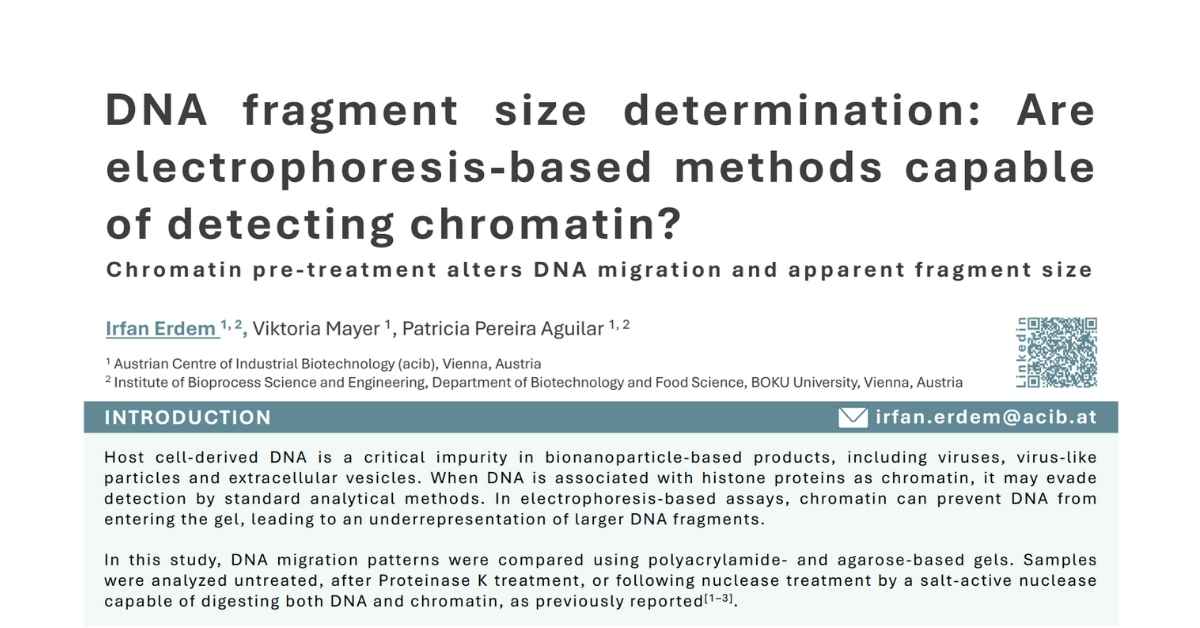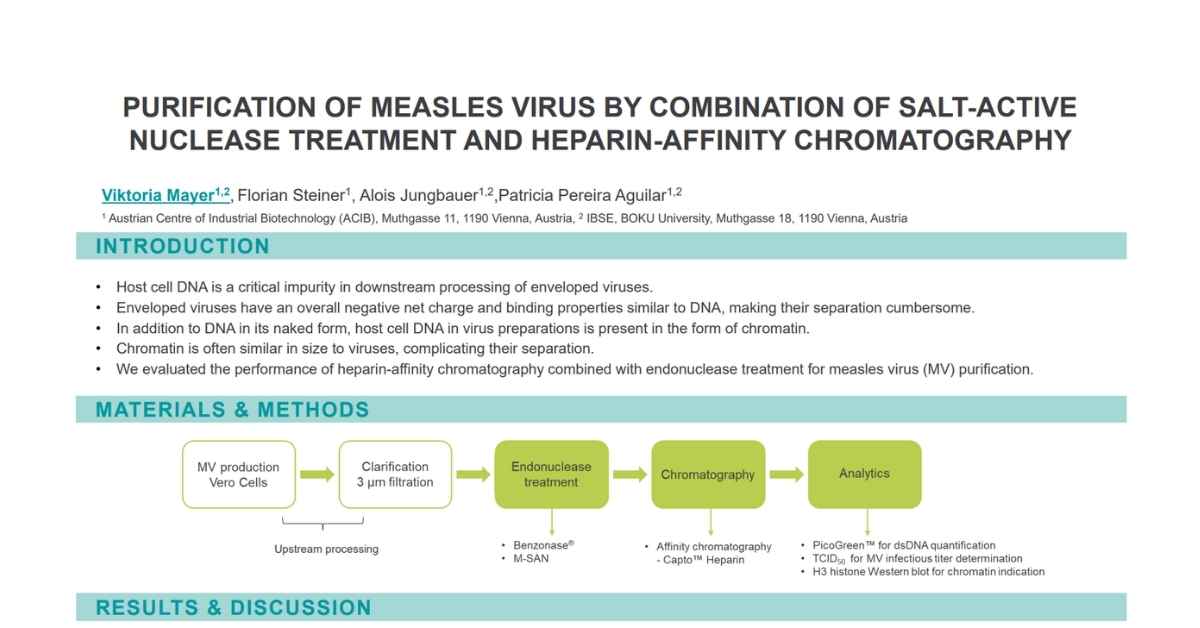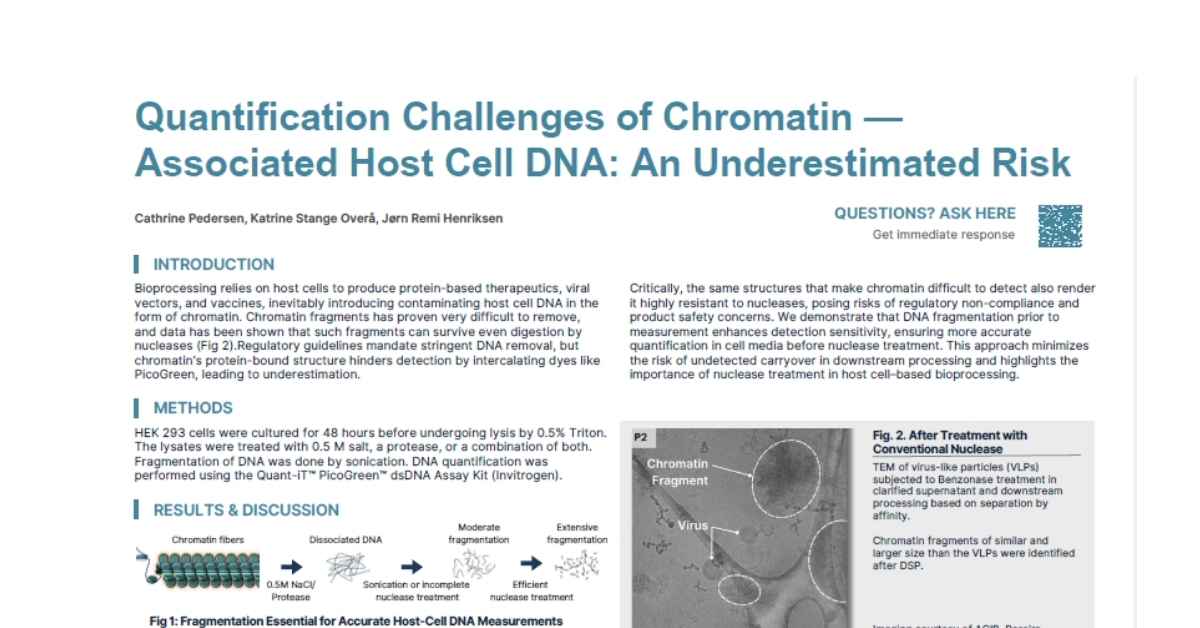

Chromatin-associated host-cell DNA can be difficult to detect, quantify, and remove during bioprocessing. Because DNA is bound within chromatin structures, traditional analytical methods may significantly underestimate impurity levels, potentially masking contamination and the true impact of nuclease treatment.
Download this scientific poster to explore how chromatin affects DNA quantification and why fragmentation and nuclease selection play a critical role in accurate measurement and impurity clearance.
In this poster, you'll learn:
- Why PicoGreen can underestimate chromatin-associated host-cell DNA by up to 20-fold.
- How chromatin structure affects DNA detection and nuclease accessibility.
- The impact of salt, sonication, and nuclease treatment on DNA quantification.
- Why DNA fragmentation is essential for accurate impurity measurement.
- How SAN HQ supports effective chromatin degradation and host-cell DNA removal.
Download the poster to understand the hidden challenges of chromatin-associated host-cell DNA and discover strategies for more accurate quantification and improved downstream processing.