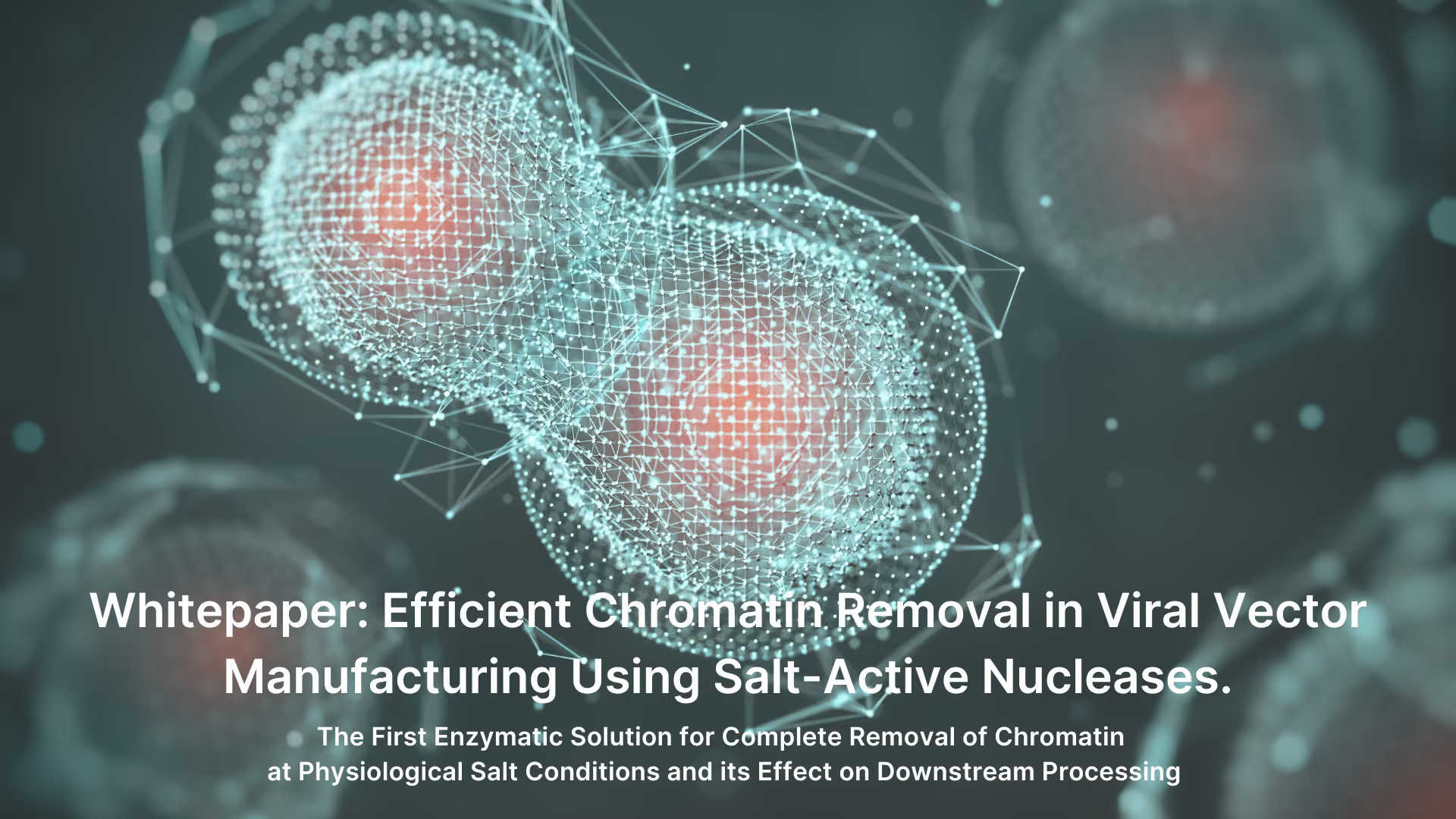
Today we announce the publication of a new whitepaper presenting a comprehensive viral vector manufacturing cost model that highlights how optimized nuclease strategy can significantly improve process yield and reduce overall cost per dose in viral vector production.
The economic challenges of cell and gene therapy
As demand for viral vectors continues to accelerate across cell and gene therapy pipelines, manufacturing cost, scalability, and downstream robustness are increasingly limiting patient access to life-changing therapies. While upstream productivity is being widely optimized, ArcticZymes’ new analysis identifies nuclease-mediated DNA and chromatin clearance as a highly under-exploited lever with substantial impact on manufacturing economics.
The newly published white paper introduces a comparative cost model built on experimentally validated data and representative adeno-associated virus (AAV) and lentiviral (LV) manufacturing workflows. The model demonstrates that adopting salt-active nuclease strategies can deliver step-change improvements in downstream performance, including increased recovery yields and materially lower cost of goods per dose.
Key findings
The model indicate that optimized nuclease selection can have a significant impact on overall process and commercial manufactuirng scale costs including:
- Approximately 2 x improvement in overall process recovery
- More than 70% reduction in nuclease-related cost per batch
- An estimated 40% reduction in cost of goods per dose
In addition to direct cost reductions, the analysis highlights improvements in downstream robustness, filtration performance, and regulatory confidence, supporting more predictable and scalable manufacturing outcomes.
ArcticZymes developed the model to support manufacturers in better understanding the economic consequences of nuclease choice under real process conditions. Rather than predicting absolute costs, the framework enables relative scenario comparisons that clearly illustrate how improved chromatin clearance and salt-tolerant enzymatic performance translate into tangible commercial benefits.
CEO Michael B. Akoh comments:
“This white paper reinforces what we increasingly see across advanced therapy manufacturing: small changes at critical process steps can have outsized impact on yield, cost, and scalability. Our cost model demonstrates that nuclease strategy is not a minor technical detail, but a strategic decision that can meaningfully improve affordability and access to viral vector–based therapies. By quantifying these effects, we aim to support our customers in making more confident, data-driven manufacturing decisions.”
The white paper is now available and is intended for process development scientists, manufacturing leaders, and decision-makers seeking practical levers to improve viral vector economics without fundamental changes to facility design or regulatory strategy.
To download the white paper or find out more about ArcticZymes range of salt active nucleases, please visit www.arcticzymes.com/optimize-nuclease-strategy