
Why did PCR
need a fish?
A remarkable discovery from a cod caught in the Arctic led to a heat-labile UDG designed to control PCR carry-over contamination, then switch off before amplification begins.
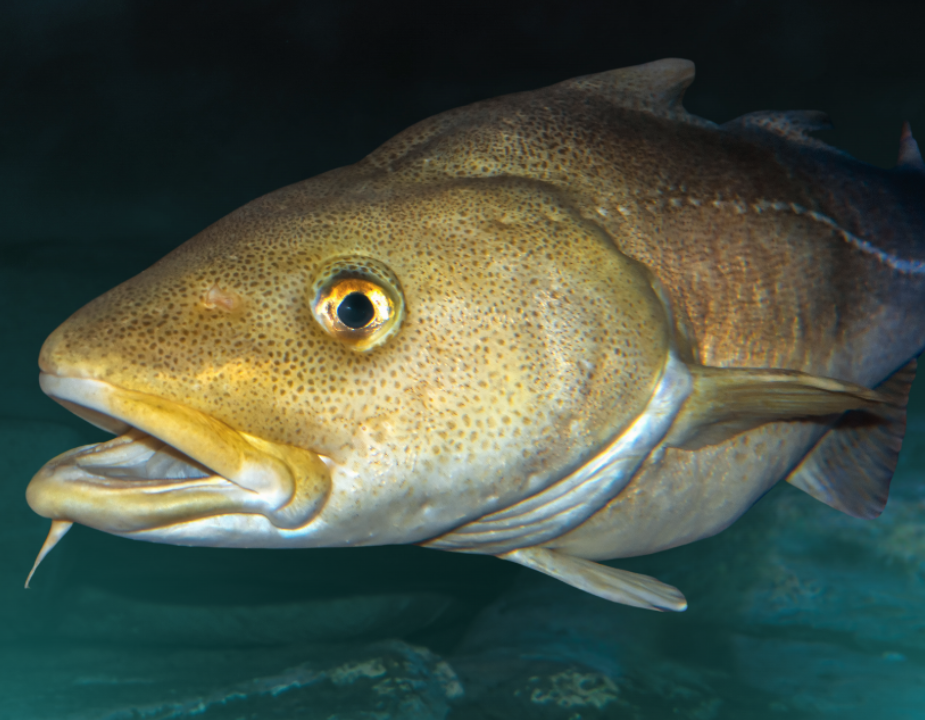
From Arctic cod to the gold standard in PCR carry-over control
A cod caught outside Tromsø became the starting point for a heat-labile enzyme developed to help protect PCR workflows from carry-over contamination.
The breakthrough was not making UDG work. It was making it stop.
Carry-over control was already possible. The challenge was controlling when the enzyme stopped acting.
ArcticZymes heat-labile UDG (Cod UNG) performs its role before amplification and is then inactivated when heat is applied.
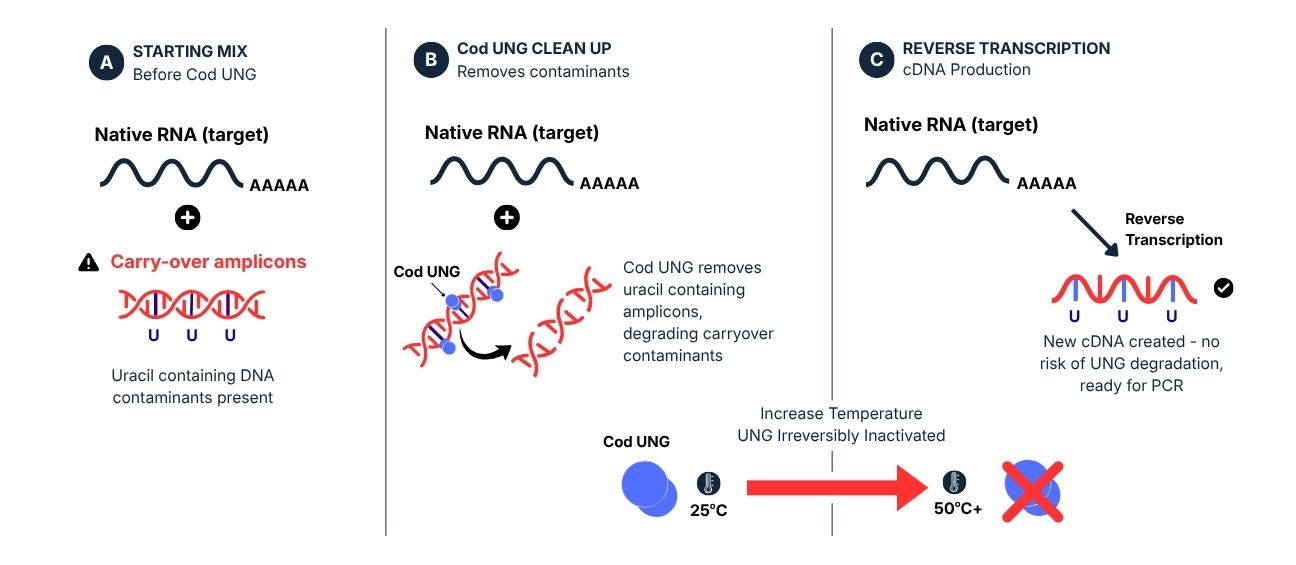
Mark previous amplicons
dUTP is built into PCR products.
Target carry-over DNA
Uracil in old amplicons is recognised and removed.
Switch Cod UNG off
Heat inactivates the enzyme before cDNA synthesis.
Prevent false positives
The treated carry-over can no longer be copied.
Active when needed. Inactive when it must be.
Often, it is not the sample or the person at the bench. It is amplified DNA from previous PCRs. Even a small amount of carry-over amplicon can become a template in the next reaction and produce a false-positive result.
They are essential, but they control different risks. Gloves and clean handling help prevent contamination from people, samples and the environment. They do not selectively remove PCR products carried over from earlier reactions. A dUTP–UDG system is designed specifically to target that previous amplification product.
Cod UNG's heat lability lets it clear carry-over contamination during setup, then lose activity before new cDNA accumulates, so synthesis proceeds undisturbed. Reverse transcription occurs below the inactivation temperature of conventional UDGs, causing degradation of newly synthesized cDNA as it forms.
Cod UNG is irreversibly inactivated by heat, so it does not reactivate after PCR, nor after the inactivation step of RT. This means that both cDNA after RT and amplicons after complete RT-qPCR stay intact, ready for downstream analysis such as sequencing. Conventional UDGs regain activity after amplification, risking loss of product.
The terms are often used interchangeably. UDG (uracil-DNA glycosylase) is the general name for the class of enzymes that remove uracil from DNA; UNG (uracil-N-glycosylase) is a specific member of that class.
Cod UNG is a uracil-DNA glycosylase — it excises uracil to begin the repair process, and is not a nuclease.
Lower risk with the people who invented Cod UNG.
Heritage & Trust
Proven Performance
Supply Security
Integration Flexibility
Why scienists trust the CodFather
Cod UNG made carry-over contamination an offer it couldn’t refuse.
Gold standard protection
Prevents carry-over contamination from compromising your results.
Heat-labile
by design
Performs during pretreatment, becomes irreversibly inactive when the job is done.
Built for RT-PCR
and PCR
Designed for seamless integration across a wide range of assays.
Used in millions
of tests
A proven choice in diagnostics, including during a global pandemic.
Ready to see it for yourself?
View full specifications and formats for Cod UNG.
Practical resources for contamination-conscious kit design
Choose the level of detail that matches where you are in the evaluation process.
Why contamination control still matters in molecular diagnotics
A concise introduction to contamination, false-positive risk and why closed-tube workflows do not remove the need for prevention.
Why Do You Need a Heat Labile UDG?
Discover why being able to reliably switch off your UDG is essential for robust, contamination risk free RT-PCR assays.
Cod UNG Assay Integration Guide
Know what to check before Cod UNG enters your assay. Evaluate dUTP chemistry, pretreatment, heat inactivation, sensitivity and workflow.
